

Specifying Showers for Multi-Storey Apartments in Kenya: Lessons on Pressure, Hot Water and Sample Approval

🚿 Plumbing & Fittings
Specifying Showers for Multi-Storey Apartments in Kenya: Lessons on Pressure, Hot Water and Sample Approval
Get a Free Quote Contact UsDisclosure
The authors work for a shower set and mixer manufacturer that supplies importers and contractors in East Africa. This article describes specification practice; it does not recommend any brand.
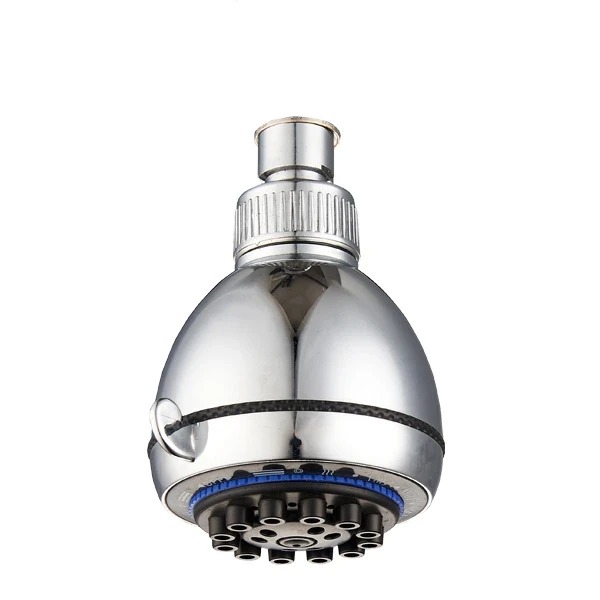
On most apartment projects, the shower is one of the last items specified and one of the first items residents complain about. A building can pass every structural inspection and still hand over units where the top-floor showers trickle, the ground-floor showers hammer, and the hot water swings from cold to scalding when a neighbour flushes. None of these are product defects in the narrow sense. They are coordination failures between the plumbing design, the water supply arrangement and the fittings that were bought.
This article sets out what we have learned from working with importers, contractors and developers on residential and serviced-apartment projects, with a focus on conditions that are common in Kenya: intermittent mains supply, roof or ground storage tanks, booster pumps, and a mix of electric instant showers, solar water heating and central hot water systems. The aim is simple: to help project teams choose and approve shower fittings that work with the building they actually have.
1. Start with the supply arrangement, not the catalogue
The single most useful question to ask before choosing a shower is: how does water reach this bathroom, and at what pressure? In Kenyan multi-storey residential buildings, the answer usually falls into one of three patterns.
Gravity supply from roof tanks. Water is pumped from the mains or a borehole to tanks on the roof and then fed down to the units. Pressure at each outlet depends on the height of the water surface above it. Every 10 metres of head gives roughly 1 bar. That means the top-floor units, which sit only a few metres below the tank, may have well under 0.5 bar at the shower, while units ten floors down have plenty.
Pumped (boosted) supply. A booster set maintains pressure throughout the building. This solves the top-floor problem but, if the system is not zoned or fitted with pressure-reducing valves, the lower floors can see pressures far higher than fittings need. High static pressure shows up as noisy flow, water hammer when valves close quickly, and shorter life for cartridges and hoses.
Mixed supply. Cold water is boosted, but hot water comes from a solar cylinder or a gravity-fed tank, or the reverse. This is where most temperature complaints begin, because a mixer is being asked to blend two supplies at very different pressures.
The design consequence is that “a shower” is not one specification. On a tall gravity-fed building, the top two or three floors may need a different shower head from the rest of the block, or a dedicated pump, while the lower floors need pressure reduction. Writing one line in the bill of quantities for every unit is the root of many snag lists.
2. Match the shower head to the available pressure
Shower heads are designed around a working pressure range. Large rain heads with many nozzles need both pressure and flow to give an even spray; at low pressure they produce a weak, droopy curtain of water. Smaller heads with fewer, finer nozzles or air-induction designs feel much stronger at the same flow and pressure.
Practical rules we use when advising on low-pressure floors:
- Prefer compact heads and hand showers with fine nozzles over large overhead rain plates.
- Check that the head’s flow regulator suits the pressure. Many heads are fitted with restrictors to save water; on a very low-pressure supply, a restrictor intended for a high-pressure system can starve the shower.
- Avoid long, small-bore hose runs and multiple diverter outlets on the weakest floors. Every bend, diverter and metre of hose costs pressure.
Water efficiency still matters, especially where supply is intermittent and storage is limited. The U.S. EPA’s WaterSense programme is a useful reference point: its showerhead specification caps flow at 2.0 gallons per minute (about 7.6 litres per minute) while requiring that the spray still performs acceptably. It is not a Kenyan requirement, but it is a well-documented benchmark that project teams can use when comparing products, and it shows that low flow and good performance are not mutually exclusive if the head is matched to the supply.
3. Balance the pressures feeding a mixer
A conventional manual mixer simply proportions hot and cold water. If one supply is at 3 bar and the other at 0.3 bar, the stronger side dominates and the user cannot find a comfortable setting. Worse, when another fixture draws water from the same line, the balance shifts and the temperature jumps.
Three approaches work in practice:
Feed hot and cold from the same source and pressure. For example, if hot water comes from a gravity solar cylinder, feed the cold side of the shower from the same tank rather than from the boosted mains.
Use pressure-reducing valves to bring the stronger supply closer to the weaker one at the bathroom or floor level.
Specify thermostatic mixers where pressures cannot be balanced, or where residents include children and elderly people. A thermostatic cartridge compensates for pressure and temperature changes in the supplies and holds the outlet temperature much more steadily than a manual mixer. It still needs both supplies within its stated operating range, so this is not a substitute for sensible system design.
4. Treat hot water temperature as a safety issue in both directions
Hot water systems have two opposite risks. Stored water that is kept too cool can allow bacteria such as Legionella to grow; water delivered too hot can scald. The World Health Organization’s guidance on Legionella and the prevention of legionellosis explains why hot water storage is normally kept hot enough to control bacterial growth, which is exactly why the outlet temperature must then be controlled at or near the point of use.
For apartment projects this means:
- Do not lower the storage temperature to solve a scalding complaint. Control temperature at the outlet instead, using thermostatic mixing valves or thermostatic shower mixers.
- Pay particular attention to solar water heating. On a sunny afternoon, an unregulated solar cylinder can deliver water far hotter than a resident expects, so a tempering valve or thermostatic mixer is worth specifying from the start.
- Agree the maximum outlet temperature with the client and write it into the specification, so that the plumbing contractor and supplier are working to the same number.
Need Help Delivering Your Construction Project in Kenya?
Structrum Limited supports developers and contractors across Kenya with structural engineering, site supervision, NCA compliance and complete construction project management. Whatever your project, we help you build it right, on time and on budget.
Get a Quote Contact Us5. Get the wall layout right before the tiles go on
Concealed shower valves and wall-mounted shower sets depend on dimensions that are fixed at first-fix stage: the centre distance between hot and cold inlets, the depth of the valve body behind the finished wall, and the height of the outlet for the overhead arm. Once the wall is tiled, correcting any of these means breaking tiles.
On several projects we have seen the same sequence: the plumber installs inlets at a standard spacing, the shower sets arrive with a different spacing or a different thread, and the site team improvises with eccentric connectors and extensions. The result works, but it looks untidy and adds leak points.
To avoid this, include the following in the plumbing drawings and the purchase order, not just in the supplier’s catalogue:
- Inlet centre distance and thread type for exposed mixers.
- Minimum and maximum wall finish depth for concealed bodies (plaster, tile adhesive and tile thickness together).
- Outlet height for the overhead shower arm and the position of the hand shower bracket.
- Which side hot and cold must be on, and whether the layout is mirrored in adjacent bathrooms.
6. Approve a sample under site conditions
Catalogue photographs and data sheets do not tell you how a shower performs on your building’s water. Before committing to a bulk order for a whole block, we recommend a formal sample approval step:
- Install the sample in a mock-up bathroom, ideally on the worst-case floor (usually the top floor on gravity supply).
- Measure flow at the shower head with a bucket and stopwatch, and record the pressure if a gauge is available.
- Test temperature stability by running the shower and opening and closing another tap on the same line.
- Check finish and fit: thread engagement, escutcheon coverage over the tiled wall, hose length and bracket height.
- Sign and seal the approved sample, and keep it on site. Bulk deliveries are then checked against it, not against a photograph.
This step usually costs a few days. It regularly saves weeks of remedial work and disputes after handover.
7. Plan for maintenance from day one
Many parts of Kenya have hard or sediment-laden water, especially where boreholes supplement mains supply. Scale and grit collect in shower nozzles, inlet filter screens and mixer cartridges. Three inexpensive decisions make maintenance easier:
- Specify heads with flexible silicone nozzles that can be cleaned by rubbing.
- Make sure inlet filter screens are accessible without removing the whole mixer.
- Order a small stock of spare cartridges, washers and hoses with the main order, and record the part numbers in the building’s operation and maintenance manual.
Conclusion
Most shower complaints in multi-storey residential buildings come from mismatches: between the shower head and the available pressure, between the hot and cold supplies feeding a mixer, between the wall layout and the fitting delivered to site. They can almost all be avoided by asking a few questions early, writing the answers into the specification, and approving a sample on the building’s own water before bulk ordering.
For project teams, the practical checklist is short: know your supply arrangement floor by floor, match heads to pressure, balance or thermostatically control the mixer supplies, control temperature at the outlet, fix the wall dimensions before tiling, and approve a sample under site conditions.
Build Your Project on the Right Foundation
Structrum Limited manages the full construction process from groundbreaking to handover, backed by EBK-registered engineers, accredited site supervisors and a project management team that keeps your build on programme and within budget.
Get a Quote Contact Us NowAbout the Author
About the author: Quality Sanitary Ware Team. We are a shower set and mixer manufacturer based in Ningbo, China, founded in 2011, and work with importers, distributors and contractors on shower specification and spare parts for projects in Africa and the Middle East. More: https://qualitysanitaryware.com/resources/shower-sample-approval-before-bulk-order