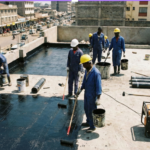
Asbestos alternatives in Kenyan construction

Construction Guide · 2026/2027
Get a Free Quote
Contact Us
Asbestos Alternatives in Kenyan Construction
Asbestos alternatives in Kenyan construction are no longer optional. Since Kenya’s 2006 ban and the 2024 government directive ordering removal of all asbestos roofing within 90 days, building owners, institutions, contractors, and engineers across the country are urgently looking for safe, affordable, and NEMA-compliant replacements.
This guide covers every credible alternative to asbestos currently available in Kenya — from galvanised iron sheets supplied by Mabati Rolling Mills and Nail Industries, to fibre cement boards, glass wool insulation, polycarbonate sheets, and solar roofing tiles. Each material is evaluated for performance, cost, availability, and suitability for Kenyan conditions.
You will also find a complete breakdown of Kenya’s asbestos regulatory framework under NEMA, the health risks that make asbestos removal an urgent national priority, and a step-by-step guide to NEMA-compliant asbestos disposal across every county.
Whether you are a developer replacing an old school roof, a structural engineer specifying new materials, or a student studying construction management, this is the definitive resource on asbestos alternatives in the Kenyan context.
Asbestos alternatives in Kenyan construction are urgently needed because millions of square metres of asbestos sheeting still sit on school rooftops, hospital wards, military barracks, and affordable housing estates built before Kenya’s 2006 ban. The health consequences are real, documented, and mounting. The solutions are available right now.
Kenya is not short of options. The question is which alternative best fits the structural requirements, the budget, the climate zone, and the long-term maintenance capacity of any given project. A school in Wajir faces different environmental demands from a commercial building in Nairobi’s Westlands. A government hospital replacing deteriorating asbestos ceilings faces different constraints from a private developer specifying a new warehouse roof in Athi River.
This guide cuts through the noise and gives you exactly what you need to make the right material choice for your specific context. It is written for construction professionals, developers, students, and building owners — people who need accurate technical information, not vague reassurances. The availability of local building materials varies significantly across Kenya’s regions, and that variation matters deeply when choosing an asbestos alternative that will actually be practical to source, install, and maintain.
32K+
Tonnes of asbestos in Kenya
188
Schools with asbestos identified
2006
Year Kenya banned asbestos
200K+
Global deaths/yr from asbestos
What Is Asbestos and Why Was It Used in Kenyan Construction?
Asbestos is a group of six naturally occurring fibrous silicate minerals. They form in metamorphic rock deposits worldwide. What made asbestos so attractive to the construction industry was a combination of properties that no other single natural material could match at the price point: exceptional fire resistance, thermal insulation, tensile strength, chemical inertness, and moisture resistance. It also happened to be cheap.
In Kenya, asbestos use peaked in the 1960s and 1970s. The colonial-era construction programme had already embedded asbestos sheets in government buildings, schools, and military facilities. Post-independence public construction continued the same practice. The material was used in roofing sheets, ceiling boards, floor tiles, fire doors, pipe lagging, and insulation around boilers and hot water systems. Kenya even had its own asbestos mining operations before these were halted.
The construction industry worldwide, including Kenya, treated asbestos as indispensable. It was the insulation of choice. It was the roofing sheet that stood up to heat and rain. It was the ceiling board that helped acoustics in classrooms. And then, in the 1980s, the evidence became undeniable: the very fibres that made asbestos so useful were also destroying the lungs of everyone who breathed them in.
What Makes Asbestos So Dangerous?
When asbestos-containing materials are disturbed — drilled, cut, broken, weathered, or simply aged to the point of fraying — they release microscopic fibres into the air. These fibres are so fine and light that they remain airborne for hours. When inhaled, they lodge permanently in the lung tissue and the lining of the thoracic cavity. The body cannot break them down or expel them. Over decades, they cause three catastrophic conditions.
Mesothelioma is the most strongly associated with asbestos. It is an aggressive cancer affecting the pleural membrane surrounding the lungs and the peritoneal membrane of the abdomen. It is notoriously difficult to treat and carries a poor prognosis. Asbestosis is progressive and irreversible scarring of the lung tissue that reduces respiratory capacity over time — it is not cancer, but it is severely debilitating. Lung cancer risk is substantially elevated in asbestos-exposed populations, particularly among those who also smoke. The World Health Organization states unequivocally that all forms of asbestos are carcinogenic. Globally, more than 200,000 people die from occupational asbestos exposure every year — more than 70% of all work-related cancer fatalities.
In Kenya, the danger is compounded by the condition of existing asbestos. Many asbestos sheets on schools, hospitals, and housing estates are now more than 40 years old. They are cracked. They are broken at the edges. Some have holes where they have corroded or been impacted. Deteriorating asbestos sheets release fibres continuously — into air that children breathe during class, into rainwater that communities harvest and drink. This is the scale of what Kenya is dealing with.
Kenya’s Asbestos Problem in Numbers
According to parliamentary documentation, Kenya has an estimated 32,000 tonnes of asbestos across public and private buildings. The private sector alone accounts for 8,467 tonnes. At least 188 schools have been formally identified as containing asbestos in quantities requiring urgent removal. These numbers represent the known inventory. The actual distribution is likely wider.
Kenya’s Asbestos Regulatory Framework: NEMA and the 2024 Directive
Kenya’s legal framework on asbestos is anchored in the Environmental Management and Coordination Act (EMCA), under which the National Environment Management Authority (NEMA) operates as the primary regulatory body. The ban on asbestos importation, manufacture, and use was enacted in 2006. That ban was clear. Compliance has been slow.
The turning point came in August 2024. Cabinet Secretary for Environment, Climate Change, and Forestry Aden Duale issued a countrywide directive through NEMA ordering all buildings — public and private — to remove asbestos roofing within 90 days. The directive mandated NEMA to map all asbestos-containing facilities nationwide and compile a complete inventory. Ministries of Defence, Internal Security, Education, and Health received formal instructions to audit their facilities. Parliament followed up by giving public institutions one year to comply.
NEMA has developed national guidelines for the safe removal and disposal of asbestos. These guidelines specify that only NEMA-registered companies and professionals may carry out asbestos abatement work. Asbestos waste must be packaged in airtight containers, labelled “Danger — Contains Asbestos Fibres,” and transported only to NEMA-approved landfill sites that are not located near human settlements. These requirements apply uniformly across Kenya. You can access NEMA’s asbestos guidelines and the list of registered removal companies directly at NEMA Kenya — National Environment Management Authority
For building owners and institutions navigating this compliance landscape, understanding what documentation is required before and after asbestos removal is critical. The documentation required before starting a construction project provides a framework that includes the permitting and notification requirements relevant to asbestos removal projects. Compliance with NCA regulations in Kenya runs parallel to NEMA requirements — both bodies have a role in ensuring the asbestos replacement process is managed professionally.
“We cannot be having our men and women in uniform being housed under asbestos, the same case to our school-going children and even patients in our hospitals.” CS Aden Duale, Cabinet Secretary for Environment, August 2024
The 10 Best Asbestos Alternatives in Kenyan Construction
The market for asbestos alternatives in Kenya is mature and well-supplied. The materials available cover every application in which asbestos was used — roofing, ceiling boards, insulation, fireproofing, and pipe lagging. Here is the complete picture.
Galvanised Iron Sheets
The most widely used roofing alternative. Steel coated in zinc for corrosion protection. Available in multiple profiles and gauges from Kenyan manufacturers.
RoofingColour-Coated Steel Sheets
Galvanised steel with a pre-painted polymer coating. Superior aesthetics, longer coating life, and high durability under Kenyan UV and rainfall conditions.
RoofingFibre Cement Sheets
Portland cement reinforced with cellulose fibre. Fire-resistant, moisture-proof, termite-proof, and structurally closest to asbestos sheets in form and use.
Roofing & CeilingsGlass Wool Insulation
Fibreglass insulation blankets replacing asbestos lagging and thermal insulation. Excellent thermal and acoustic performance without carcinogenic fibres.
InsulationPolycarbonate Sheets
Transparent or translucent thermoplastic roofing panels. Lightweight, UV-resistant, and ideal for skylights, covered walkways, and greenhouse roofing.
RoofingSolar Roofing Tiles
Integrated photovoltaic roofing panels that generate electricity while protecting the building. Premium alternative for institutions with sustainability targets.
Roofing + EnergyGalvanised and Colour-Coated Iron Sheets: Kenya’s Most Practical Solution
For most Kenyan building owners replacing asbestos roofing, galvanised iron sheets are the first and most sensible answer. They are affordable, instantly available, widely understood by every roofing contractor in the country, and they use the same structural supports as asbestos sheets. You do not need to redesign a roof to install iron sheets on a frame that held asbestos.
Kenya’s iron sheet market is dominated by a small number of well-established manufacturers who roll and coat steel locally. Mabati Rolling Mills (MRM) is the market leader, operating facilities in Nakuru and supplying a nationwide distribution network. Their Versatile, Corrugated, and IBR profile sheets are available in gauges from 0.25mm to 0.55mm, with the 0.3mm gauge being most commonly used for residential and institutional roofing. Nail Industries Kenya is a strong domestic competitor, while international brands from India and China also supply the market through Nairobi traders.
How Do Galvanised Iron Sheets Compare to Asbestos?
The honest comparison is nuanced. Galvanised iron sheets are lighter than asbestos sheets of equivalent coverage, which means they can be more susceptible to wind uplift if not correctly fixed — proper gauge selection and adequate fixing intervals are non-negotiable. Asbestos had a naturally muted acoustic profile; iron sheets conduct sound more, making rain noise louder. This matters in classrooms and hospital wards.
However, on every health and safety measure, iron sheets win decisively. They contain no hazardous fibres. They do not degrade in ways that release toxic particles. Rainwater collected from iron sheet roofs is free from asbestos contamination. And their lifespan — properly installed with correct gauge and coating for the climate — is 20 to 30 years for standard galvanised sheets and up to 40 years for pre-painted colour-coated alternatives.
Colour-coated steel roofing — sold under brand names including MRM’s Versatile Colour and Nail Industries’ VRM Steel — adds a factory-applied polymer coating over the zinc layer. This significantly increases corrosion resistance in coastal areas like Mombasa, Malindi, and Lamu, where the salt-laden air aggressively attacks uncoated steel. For coastal Kenya, colour-coated or aluminium-zinc alloy coated sheets are the recommended specification over standard galvanised. For a detailed cost comparison of iron sheet brands available in the market, current iron sheet prices from top Kenyan companies provide the clearest picture for budgeting purposes. You can also compare suppliers directly by reviewing the top 10 iron sheet companies in Kenya to understand the full supplier landscape before specifying.
Specifying the Right Iron Sheet Gauge for Your Project
Gauge selection is the single most important technical decision in iron sheet roofing. Thicker gauge provides greater rigidity, wind resistance, and lifespan — but at a higher cost per square metre. The wrong gauge choice is the most common cause of premature iron sheet roofing failure in Kenya. Here is the practical specification guide:
For residential housing with rafter spans up to 900mm, 0.3mm gauge is the minimum appropriate specification. For institutional buildings — schools, hospitals, community halls — where wind uplift loads are higher and longevity is critical, 0.4mm to 0.47mm gauge is appropriate. For industrial and commercial applications with long spans and high wind exposure, 0.5mm to 0.55mm gauge and IBR profile sheets provide the required structural performance. In ASAL regions of northern Kenya where wind loads are severe, a minimum 0.4mm gauge should be specified regardless of building type.
Replacing Asbestos on Your Project? Start Here.
Structrum Limited provides expert material specification, procurement guidance, and construction supervision for asbestos replacement projects across Kenya. We know what works — and what does not — in every climate zone.
Get a Quote Contact Us TodayFibre Cement Sheets: The Closest Like-for-Like Asbestos Replacement
Of all available alternatives, fibre cement sheets are structurally and functionally most similar to asbestos-cement sheets. This is not a coincidence — fibre cement was specifically developed to replace asbestos-cement after the health risks became apparent. The manufacturing process is almost identical, substituting cellulose fibre (processed wood pulp) for the asbestos fibre as the reinforcing component in a Portland cement matrix.
The result is a rigid, flat or corrugated sheet that looks like the old asbestos product, can be cut and drilled with similar tools (with appropriate dust protection), and fits existing purlin spacing designed for asbestos sheets. For institutions replacing asbestos with minimal structural modification, fibre cement is often the most practical specification.
What Makes Fibre Cement Uniquely Suited to Kenya’s Conditions?
Kenya’s climate variability demands a roofing and ceiling material that can handle both tropical rainfall and intense UV radiation. Fibre cement handles both well. It does not degrade under UV exposure the way some polymer-based products do. It absorbs moisture without structural failure, then dries out without warping or cracking — a behaviour pattern closely related to its cement-based composition. Insects including termites cannot damage it. It does not rust. It is inherently fire-resistant to a level that meets Kenyan building standards for institutional construction.
Acoustic performance is where fibre cement significantly outperforms iron sheets. A fibre cement ceiling or roof cladding produces far less rain noise than corrugated steel — important in classrooms, hospitals, and office environments. This acoustic advantage alone makes fibre cement the preferred specification for educational facilities replacing asbestos ceiling boards.
In Kenya’s market, fibre cement products are available through building material merchants in Nairobi’s Industrial Area, Mombasa Road, and Kisumu. International brands including Everite and Nutec are distributed locally. Athi River Mining (ARM), now part of National Cement, has also expanded into composite building panel production that includes fibre-reinforced cement products. Pricing varies, but fibre cement sheets are generally 30 to 60 percent more expensive per square metre than equivalent galvanised iron sheets — a premium justified by their superior durability and acoustic performance in institutional settings.
Glass Wool and Mineral Wool: Replacing Asbestos Insulation in Kenya
Asbestos was used extensively in Kenya not just as roofing sheets but as pipe lagging, boiler insulation, ceiling board backing, and acoustic panels in older commercial and institutional buildings. Replacing this insulation asbestos requires a different category of material altogether — and the right answer depends on the application.
Glass wool (fibreglass insulation) is the most direct functional replacement for asbestos in thermal and acoustic insulation applications. It is made from molten glass spun into fine fibres and formed into blankets, rolls, or rigid boards. Glass wool provides excellent thermal performance, good acoustic absorption, and fire resistance without producing carcinogenic fibres. It is available in Kenya from a range of suppliers, and the full technical specification of glass wool blankets is essential reading before making a procurement decision — the density, thermal conductivity (lambda value), and facing material all vary between products and applications.
Mineral wool (rock wool) is made from molten basalt rock and slag. It has higher density and better fire resistance than glass wool, making it preferable in applications requiring fire protection rather than pure thermal insulation. In commercial high-rise buildings in Nairobi, mineral wool is now standard in inter-floor fire compartmentation, pipe and duct insulation, and acoustic wall panels. It replaced asbestos in these applications globally in the 1990s and is the current industry standard specification for any fire-rated insulation assembly.
Are Glass Wool Fibres Safe?
This is a reasonable question that arises whenever a fibrous insulation material is discussed as an asbestos replacement. The critical distinction is that glass wool and mineral wool fibres — unlike asbestos fibres — are classified as bio-soluble. The body’s natural clearance mechanisms can break down and eliminate these fibres over time. Long-term epidemiological studies have not established a causal link between glass wool or mineral wool exposure and the cancers associated with asbestos. The World Health Organization and the International Agency for Research on Cancer (IARC) do not classify commercially produced glass wool or mineral wool as human carcinogens. That said, all fibre insulation should be handled with appropriate protective equipment: dust masks, gloves, and goggles are standard precautions during installation.
For Kenyan projects replacing asbestos pipe insulation in boiler rooms, plant rooms, and hospital steam systems, polyurethane foam is an additional alternative worth specifying. Polyurethane foam — either spray-applied or pre-formed sectional pipe insulation — provides excellent thermal performance, moisture resistance, and can be applied to irregular pipe profiles that pre-formed insulation cannot accommodate. It is non-toxic and contains no hazardous fibres. Its thermal performance per unit thickness typically exceeds glass wool, making it suitable where space is limited around pipes.
Polycarbonate Roofing Sheets: Where Asbestos Never Really Belonged
Polycarbonate is a thermoplastic that has nothing in common with asbestos except that it forms sheets of similar dimensions. It was not developed as an asbestos replacement — it exists in an entirely different market segment. But for specific applications where asbestos was used out of convenience rather than necessity, polycarbonate is now the clear preferred specification.
Those applications include covered walkways, carport roofs, greenhouse growing structures, light-diffusing roof panels in warehouses and factories, and skylights. In all of these contexts, polycarbonate’s defining advantage — it transmits natural light — makes it superior to any opaque alternative. A factory floor that previously relied on asbestos sheeting can achieve dramatically better natural lighting with a partial polycarbonate roof, reducing daytime electricity costs and improving working conditions simultaneously.
Polycarbonate sheets available in Kenya are typically multi-wall (hollow channel) or twin-wall construction, providing thermal insulation while transmitting 80 to 90 percent of visible light. UV-stabilised grades are essential in Kenya’s high-UV environment — sheets without UV stabilisation become brittle and yellow within two to three years of outdoor exposure. Only UV-stabilised grades should be specified for any Kenya project. Impact resistance is polycarbonate’s other standout characteristic: it is virtually unbreakable under normal construction and operational loads, unlike glass or acrylic alternatives.
Solar Roofing Tiles: The Premium Alternative That Does More Than Replace
Solar roofing tiles represent the most ambitious category of asbestos alternative in Kenya’s construction market. Rather than simply replacing a roof covering, they turn the roof into an active energy-generating asset. For educational institutions, hospitals, and government buildings that are simultaneously under pressure to remove asbestos and reduce energy costs, solar roofing is an increasingly compelling proposition.
The adoption of Hantile solar roofing tiles in Kenya illustrates how this technology is being specified in the local market. Hantile integrates monocrystalline solar cells directly into a roofing tile format that provides weatherproofing and electricity generation simultaneously. The installation process differs significantly from conventional roofing — the tiles require electrical integration by a qualified electrician, inverter specification and installation, and grid connection or battery storage depending on the site’s energy configuration.
The capital cost of solar roofing tiles is substantially higher than conventional alternatives. Per square metre, they are four to ten times more expensive than galvanised iron sheets. The economic case is made over the life cycle: the electricity generated offsets energy bills over 20 to 25 years, and the combined roof-plus-power-generation function means the investment is evaluated against two separate line items in a facility’s budget. For Kenyan schools and hospitals — where electricity costs are a significant burden and asbestos removal is mandatory regardless — the incremental cost of solar tiles versus iron sheets can be partially justified by the avoided energy expenditure.
When to Specify Solar Roofing Tiles in Kenya
Solar roofing tiles are most appropriate where the building has a high daytime energy demand (schools, clinics, commercial buildings), where the electricity tariff is high and stable, where the roof orientation is predominantly south-facing or near-horizontal to maximise solar gain, and where the institution has the technical capacity to maintain the system. They are least appropriate for dense shading environments, buildings with complex roof geometries, or projects where the installation budget is severely constrained.
Cellulose Fibre Insulation: The Eco-Friendly Alternative for Green Construction
Cellulose fibre insulation has grown significantly as a specification choice globally and is beginning to appear in Kenya’s construction market, particularly in green building projects and donor-funded development schemes. It is produced from recycled newspaper and paper waste — up to 85 percent recycled content — chemically treated with borate compounds for fire resistance, pest resistance, and moisture management.
In Kenya’s context, cellulose fibre insulation is most applicable in retrofit thermal insulation projects. When an existing building’s asbestos ceiling boards are removed and the ceiling void is exposed, blowing cellulose fibre insulation into that void provides excellent thermal performance at a competitive cost. The installed cost per square metre of blown cellulose insulation is typically lower than equivalent glass wool blanket insulation when installation labour is included, because the blowing process is faster than manual blanket laying.
Cellulose fibre also serves a secondary function in Kenya’s construction chemistry: as a thickening and water-retention additive in mortar and plaster. Cellulose powder mixed into mortar formulations improves workability, reduces slump, and increases moisture retention during curing — improving the final strength and surface quality of plastered walls. This dual application — insulation and mortar additive — makes cellulose fibre worth understanding for any construction professional working on green or retrofit projects in Kenya. The trend toward sustainable construction practices in Kenya is accelerating, and cellulose fibre is positioned well within that movement.
Thermoset Plastic and Amorphous Silica: Specialist Alternatives for Industrial Applications
Two asbestos alternatives deserve mention for the specific industrial applications where asbestos was used as electrical insulation and high-temperature industrial lagging — contexts that go beyond ordinary building construction but remain relevant to Kenyan industrial construction.
Thermoset plastic flour is used in electrical insulation components, junction boxes, and motor housings where asbestos electrical paper and cable wrap were once specified. It is made by heating powder-formed liquid plastic and moulding it to shape. The result is a rigid, heat-resistant, electrically insulating component with no fibrous content and no health risk during routine handling. In Kenya’s electrical and mechanical engineering industries — particularly in manufacturing facilities, food processing plants, and water treatment infrastructure — thermoset plastic compounds are now standard specification in place of asbestos electrical components.
Amorphous silica fabrics are specialist high-temperature textiles used in industrial fireproofing applications — welding curtains, furnace door seals, pipe penetration fire stops, and protective clothing in high-temperature environments. They are structurally amorphous (non-crystalline) silica rather than the crystalline silica found in some construction materials, and their fibre geometry does not produce the respiratory hazard associated with asbestos. In Kenya’s industrial construction sector, amorphous silica fabrics are now the standard specification for any high-temperature protective application previously served by asbestos fabric.
Comparing Asbestos Alternatives: Performance, Cost, and Availability in Kenya
Understanding how each alternative performs across the key criteria that matter in Kenyan construction helps make the specification decision clear. The table below compares the main alternatives on the dimensions most relevant to Kenyan building conditions, procurement realities, and long-term performance.
| Alternative Material | Primary Application | Relative Cost | Fire Resistance | Acoustic Performance | Availability in Kenya | Lifespan (Est.) |
|---|---|---|---|---|---|---|
| Galvanised Iron Sheets | Roofing | Low | Moderate | Poor (rain noise) | Excellent — nationally | 20 to 30 years |
| Colour-Coated Steel Sheets | Roofing | Low to Medium | Moderate | Poor (rain noise) | Good — major towns | 25 to 40 years |
| Fibre Cement Sheets | Roofing and Ceilings | Medium | Excellent | Good | Moderate — urban areas | 30 to 50 years |
| Glass Wool Insulation | Thermal and Acoustic Insulation | Medium | Good | Excellent | Good — major towns | 20 to 40 years |
| Mineral Wool (Rock Wool) | Fire and Acoustic Insulation | Medium to High | Excellent | Excellent | Moderate — Nairobi, Mombasa | 30+ years |
| Polycarbonate Sheets | Translucent Roofing and Skylights | Medium | Moderate | Poor | Good — urban traders | 15 to 25 years |
| Polyurethane Spray Foam | Pipe and Roof Insulation | High | Requires coating | Good | Moderate — specialist contractors | 20 to 30 years |
| Cellulose Fibre Insulation | Thermal Insulation (Retrofit) | Low to Medium | Good (borate-treated) | Good | Limited — specialist suppliers | 30+ years |
| Solar Roofing Tiles | Roofing + Power Generation | Very High | Good | Moderate | Limited — specialist installers | 25 to 30 years |
| Aluminium Sheets | Roofing (Coastal and Industrial) | High | Moderate | Poor | Good — hardware merchants | 40 to 50 years |
The cost column above is relative — expressed in comparison to galvanised iron sheets as the baseline “Low” cost option. Actual prices vary by location, supplier, and market conditions. Current market prices for iron sheets in Kenya serve as the reference point for this comparison. For institutional clients working within NCA-regulated procurement frameworks, the prevailing labour rates for construction across Kenya’s regions must be factored into the total installed cost for each alternative, as installation complexity varies substantially between material types.
How to Replace Asbestos Roofing in Kenya: A Step-by-Step Guide
Replacing asbestos roofing in Kenya is not a DIY project. It is a regulated process requiring NEMA-registered professionals, proper equipment, and documented disposal. Here is how it is done correctly.
1
Engage a NEMA-Registered Removal Contractor
Non-Negotiable First StepContact NEMA at nema.go.ke to obtain the current list of registered asbestos abatement companies in your region. Never attempt to remove asbestos sheets yourself or hire an unregistered contractor. Unregistered removal creates NEMA liability for the building owner, not just the contractor.
2
Pre-Removal Assessment and Plan
Site InvestigationThe registered contractor conducts a site assessment to establish the quantity and condition of asbestos, access requirements, estimated cost, and a site-specific removal methodology plan. NEMA guidelines require this plan to be in place before removal begins. The assessment also confirms whether the underlying roof structure is sound enough to accept the replacement material without additional structural repair.
For buildings that have been under asbestos roofing for decades, it is common to find deteriorated purlins, corroded ridge capping, and failed fascia boards that also need replacement. Catching these structural deficiencies before asbestos removal begins avoids costly work stoppages mid-project. The range of roof types used in Kenyan buildings determines the structural assessment approach the contractor takes at this stage.
3
Select Your Replacement Material
Pre-Purchase DecisionSelect and procure your preferred alternative material before removal begins so that installation follows immediately. Leaving a stripped roof structure exposed to weather while replacement materials are sourced creates water damage to the building below. For schools and hospitals, this sequencing is critical to maintaining operational continuity during the replacement programme.
4
Evacuate Occupants and Establish Exclusion Zone
Safety MandatoryAll building occupants must be evacuated from the structure and surrounding areas during asbestos removal. The contractor establishes a clearly marked exclusion zone around the work area. Workers must wear full PPE including P3 respirators, disposable Tyvek overalls, safety goggles, and nitrile gloves. Tools used in asbestos removal cannot be used on other site activities. Wet cutting or wet stripping methods minimise airborne fibre release during removal.
5
Package Asbestos Waste to NEMA Standards
Legal RequirementAll removed asbestos must be double-wrapped in heavy-duty airtight plastic bags and placed in sealed rigid containers. Each container must be clearly labelled “Danger — Contains Asbestos Fibres” in both English and Swahili. No fibres may be released to the air during packaging. Asbestos sheets must not be broken or cut — they are removed whole wherever possible. Contaminated PPE and tools go into the same waste packaging.
6
Transport to a NEMA-Approved Landfill
Documented DisposalThe transport vehicle must be clearly labelled. Asbestos waste must go to a NEMA-approved disposal site only — not to general landfills, open dumping areas, or reuse markets. Obtain and retain the disposal receipt as documentary evidence of NEMA-compliant disposal. This documentation protects the building owner in the event of any NEMA inspection or dispute.
7
Install the Replacement Roofing
New Construction PhaseOnce the roof structure has been inspected, repaired as necessary, and confirmed sound, install your chosen alternative. For iron sheets, verify correct gauge, profile, and coating specification. Fixing intervals and types must match the engineer’s specification for the roof pitch and wind zone. For fibre cement, follow the manufacturer’s installation specification precisely — over-drilling, under-fixing, or incorrect cutting methods create cracking and premature failure. For solar tiles, the electrical integration must be completed by a qualified electrical engineer working to the Kenya Power grid connection requirements.
This is also the stage to address any roof structural improvements that were identified in the assessment. Where original purlin spacing was designed for the heavier asbestos sheets, the lighter iron sheet alternative may require additional purlin intermediate supports to prevent oil-canning (panel distortion under wind). An experienced structural engineer or roofing contractor should confirm the final specification.
8
Obtain the NEMA Disposal Certificate
Compliance DocumentationYour registered contractor should provide documentary evidence of NEMA-compliant asbestos disposal upon project completion. Retain this certificate with your building records. Government institutions may be required to submit this evidence as part of their institutional compliance reports to the relevant ministry.
Need Professional Help With Asbestos Replacement in Kenya?
Structrum Limited provides complete project management for asbestos replacement programmes — from material specification and structural assessment to procurement, supervision, and NEMA compliance documentation. We serve institutional clients, developers, and building owners across Kenya.
Get a Free Quote Contact UsAsbestos Alternatives for Specific Kenyan Building Types
The right asbestos alternative is not universal. Different building types have different performance requirements, procurement constraints, and occupant needs. Here is a targeted specification guide for Kenya’s most common building categories affected by asbestos.
Public Schools (Primary and Secondary)
Schools are the building category with the most documented asbestos presence in Kenya. Parliament’s 2024 committee report confirmed 188 schools with asbestos. The replacement specification for schools must balance three priorities: acoustic quality in classrooms, durability under minimal maintenance, and availability within the NG-CDF procurement framework.
The recommended specification for Kenyan public school roofing replacement is 0.4mm gauge colour-coated iron sheets in IBR profile, fixed at 450mm purlin centres with approved self-drilling screws and neoprene washers. The IBR (Inverted Box Rib) profile provides greater structural rigidity than corrugated profile — reducing deflection and improving rain noise performance marginally. The colour coating extends the coating life expectancy to 25 years or more, reducing repainting and maintenance costs over the facility’s lifespan.
Where classroom acoustic performance is a priority — particularly in schools that previously had asbestos ceiling boards — specify fibre cement ceiling boards below the iron sheet roof, separated by a ventilated air gap and supported on a timber or steel ceiling grid. This combination provides the closest acoustic performance to the original asbestos ceiling assembly at a manageable total cost. For classrooms in semi-permanent buildings, the complete approach to building durability in semi-permanent Kenyan structures should inform the full specification, not just the roof replacement.
Hospitals and Clinics
Health facilities have the most demanding specification requirements of any Kenyan building type affected by asbestos. Infection control, fire compartmentation, acoustic privacy for patient consultations, and ease of cleaning all drive the material choice.
For hospital roofing replacement, colour-coated steel sheets with a concealed-fix profile are preferred — the concealed fastener eliminates the visible fixing that is both a maintenance point and a potential surface for bacterial accumulation in food preparation and sterile areas. Where the existing roof structure cannot support colour-coated steel without reinforcement, aluminium roofing sheets offer a significantly lighter weight alternative at a higher cost per square metre — useful for hospital extensions with ageing structural frames.
For internal ceiling replacement in wards, corridors, and operating theatres, the asbestos ceiling boards should be replaced with mineral fibre acoustic ceiling tiles in a suspended grid system. These tiles provide Class A fire performance, excellent acoustic absorption reducing stress levels for both patients and clinical staff, and easy individual tile replacement for maintenance access to services above the ceiling void. They are available from multiple suppliers serving Nairobi’s commercial construction sector. For high-rise hospital developments in Nairobi, the tests and structural requirements for high-rise construction in Kenya are relevant to the overall project framework within which asbestos replacement occurs.
Housing Estates (Public and Private)
Kenya’s housing estate stock — particularly the Nairobi City County-managed estates like Kariokor, Bahati, Eastleigh, and the older units in Eastlands — contains substantial amounts of asbestos roofing and ceiling materials. The challenge for estate managers is replacing asbestos at scale with materials that match the budget constraints of social housing without creating new maintenance burdens.
Standard galvanised corrugated iron sheets at 0.3mm gauge are the practical answer for most social housing stock replacement. The cost per square metre is the lowest of all options, the installation skill is universally available among Kenyan roofing contractors, and the material performs adequately under normal residential loading conditions when correctly fixed. For estates in Mombasa, Kilifi, or other coastal locations, specifying aluminium-zinc alloy coated sheets (sold under the trade name Zincalume) rather than standard zinc-only galvanised sheets dramatically extends the coating life in salt-air environments. The premium over standard galvanised is modest — typically 15 to 20 percent per sheet — and the extended lifespan payback is decisive in coastal Kenya. Comparing the different housing configurations appropriate for Kenyan families provides broader context for the renovation decisions surrounding asbestos replacement in residential stock.
Industrial and Commercial Buildings
Warehouses, factories, and large-span commercial buildings using asbestos profiled sheets on their roofs have the widest range of viable alternatives of any building type. Large-span structural steel frameworks are typically more than capable of accepting heavier alternative materials if required. The specification choice here is driven by operational requirements — natural lighting, thermal comfort, acoustic management, and maintenance access.
For large-span industrial roofs, heavy-gauge IBR profile colour-coated steel (0.47mm to 0.55mm) is the standard alternative. Insulated sandwich panel roofing — where an inner steel sheet, rigid insulation, and outer steel sheet are factory-bonded — is a premium option that eliminates the condensation issues common in Kenya’s uninsulated industrial roofs where the temperature differential between inside and outside drives moisture formation on the underside of steel sheets. Partial polycarbonate panel integration in the roof provides natural daylighting that reduces energy costs throughout the working day. The relationship between building material choices and long-term energy efficiency is increasingly relevant to Kenyan industrial clients, and aligns with the growing suite of smart technology solutions for Kenyan buildings that require careful building envelope specification to function optimally.
The Performance of Kenyan Cement in Fibre Cement Manufacturing
Any discussion of fibre cement as an asbestos alternative in Kenya must acknowledge the current cement quality landscape. Fibre cement’s structural performance depends directly on the Portland cement used as its binder. The documented decline in average cement strength in Kenya’s market — driven by oversupply, competitive pressure on pricing, and in some cases substandard clinker — creates real risk in the quality of locally produced building products.
When specifying fibre cement sheets for asbestos replacement in institutional projects, it is worth understanding the cement grades and standards that govern product quality. Understanding cement grades and their applications provides the technical baseline. The strategic response to Kenya’s cement quality challenges is equally relevant — specifying third-party product testing and requiring batch certification from manufacturers of fibre cement products provides meaningful protection against substandard materials entering your project. For projects where fibre cement boards also serve a structural function in wall or floor panels, ensuring the cement content meets specification is as important as it is in any reinforced concrete element.
Waterproofing and Damp-Proofing: Asbestos Replacement Beyond the Roof
Asbestos was sometimes used in Kenya’s older buildings as a damp-proof membrane and in waterproofing applications — particularly as asbestos-felt built-up roofing membranes on flat roofs. Replacing this aspect of asbestos use requires a completely different category of material than roofing sheets.
Modern flat roof waterproofing in Kenya uses bituminous modified membrane systems, liquid-applied polyurethane or elastomeric membranes, or thermoplastic single-ply membranes (PVC or TPO). None of these contain asbestos. For existing flat roofs where asbestos-felt membranes are present, the approach depends on condition: if the membrane is intact and not releasing fibres, encapsulation under a new membrane system may be possible as a short-term measure. If the asbestos membrane is deteriorating and friable, full removal by a NEMA-registered contractor is required before new waterproofing is installed.
The professional waterproofing and damp-proofing solutions available for Kenyan construction and renovation projects today are significantly more effective than the asbestos-felt systems they replace — offering better tensile strength, greater elongation, improved UV resistance, and longer design lives. For flat-roofed institutional buildings replacing asbestos waterproofing, the seven best waterproofing methods for flat roof buildings in Kenya provides a practical specification guide covering all current options from torch-on SBS modified bitumen to liquid-applied systems. See also: NEMA Kenya’s asbestos removal and disposal guidelines for published guidance on flat roof applications. A useful external resource on internationally recognised asbestos-free building practices is available from the WHO fact sheet on the elimination of asbestos-related diseases and from Asbestos Surveys — alternative materials used in place of asbestos in construction
Cost Analysis: What Does Asbestos Replacement Actually Cost in Kenya?
The financial question is the most immediate practical concern for most building owners facing mandatory asbestos removal. Here is a realistic cost framework for Kenya’s market.
| Cost Item | Typical Range (KES/m²) | Notes |
|---|---|---|
| Asbestos Removal (NEMA-Registered) | 200 to 800 | Varies with access difficulty and sheet condition |
| Asbestos Packaging and Labelling | Included in above | NEMA-compliant materials included in contractor’s price |
| Transport to NEMA Landfill | 50 to 200 | Depends on distance to approved disposal site |
| Galvanised Iron Sheet (0.3mm) | 350 to 550 | Includes material cost, fixing screws, and labour |
| Colour-Coated Steel Sheet (0.4mm) | 500 to 800 | Higher material cost, but extended lifespan |
| Fibre Cement Sheet (Installed) | 700 to 1,200 | Includes sheet, fixings, and skilled installation labour |
| Glass Wool Insulation (Installed) | 400 to 700 | 50mm blanket on ceiling or in wall cavity |
| Polycarbonate Roofing (Installed) | 800 to 1,800 | Multi-wall UV-stabilised sheet with aluminium subframe |
| Roof Structure Repairs (If Required) | Variable | Assessed separately after asbestos removal |
| Supervision and Professional Fees | 5 to 10% of total cost | Recommended for institutional projects over KES 2M |
For a typical primary school classroom block with 200 square metres of asbestos roofing, the total project cost — removal, disposal, and replacement with 0.4mm colour-coated iron sheets — typically falls between KES 240,000 and KES 350,000 depending on location and contractor. This is within the reach of NG-CDF annual allocations for most constituencies. Larger institutional buildings require phased programmes that distribute cost across multiple financial years. Understanding the complete cost landscape of Kenyan construction works — including concrete and finishing contractor rates across Kenya’s regions — helps frame the relative cost of asbestos replacement within any institution’s broader capital maintenance programme.
Parliament’s 2024 committee recommended that NG-CDF funds and development partner resources be mobilised for the replacement of asbestos roofing in public schools in ASAL regions. International donors including the World Bank, UNICEF, and bilateral aid agencies have existing programmes supporting health and education infrastructure in Kenya that can be tapped for asbestos remediation in qualifying facilities. Building owners and county government officers seeking development partner funding should engage the Kenya National Treasury and the Ministry of Environment’s climate finance team, which coordinates donor flows related to environmental remediation.
Frequently Asked Questions — Asbestos Alternatives in Kenyan Construction
Is asbestos still legal in Kenya? +
No. Kenya banned the importation, manufacture, and use of asbestos in 2006 under the Environmental Management and Coordination Act. However, older buildings — especially public schools, hospitals, military barracks, and housing estates built before 2006 — still contain asbestos roofing. In August 2024, Cabinet Secretary Aden Duale issued a directive through NEMA ordering all buildings to remove asbestos roofing within 90 days. Parliament subsequently extended this deadline to one year for public institutions. Non-compliance carries penalties under NEMA’s enforcement powers.
What is the best replacement for asbestos roofing in Kenya? +
Galvanised iron sheets are the most widely recommended and practically available replacement for asbestos roofing in Kenya. They are affordable, nationally available, and use the same roof structure as asbestos sheets. For institutions where acoustic performance in classrooms or wards is important, colour-coated steel sheets combined with a fibre cement ceiling board provide a superior long-term outcome. For facilities with sustainability mandates and the capital to invest, solar roofing tiles offer the combined benefit of roof replacement and renewable electricity generation.
How much does asbestos removal cost in Kenya? +
Asbestos removal in Kenya costs between KES 200 and KES 800 per square metre, depending on roof accessibility, sheet condition, distance to approved disposal sites, and the contractor’s scope. Transport and disposal at NEMA-approved landfills adds KES 50 to KES 200 per square metre. A standard classroom block of 200 square metres typically costs KES 50,000 to KES 200,000 for complete removal and disposal before replacement roofing is factored in. Only NEMA-registered removal companies should be engaged.
What are the health effects of asbestos exposure in Kenya? +
Asbestos exposure causes three serious conditions. Mesothelioma is an aggressive cancer of the pleural membrane — the most directly linked to asbestos and very difficult to treat. Asbestosis is progressive scarring of the lung tissue that reduces respiratory function. Lung cancer risk is significantly elevated in asbestos-exposed individuals, particularly in combination with smoking. Critically, these conditions take 20 to 50 years to develop after initial exposure, which means people exposed to deteriorating school and hospital roofs in Kenya today will not show symptoms until decades later — making prevention now the only effective intervention.
Which companies supply asbestos alternatives in Kenya? +
Mabati Rolling Mills is Kenya’s largest iron sheet manufacturer, supplying galvanised and colour-coated steel roofing sheets through a national distribution network. Nail Industries Kenya is the main domestic competitor. For fibre cement sheets, brands including Everite and Nutec are distributed through building material merchants in Nairobi, Mombasa, and Kisumu. Glass wool and mineral wool insulation is available through specialist insulation suppliers in Nairobi’s Industrial Area. Solar roofing tiles are supplied by companies distributing Hantile and other solar roofing brands active in the Kenyan market.
Can asbestos sheets be painted or sealed instead of being removed in Kenya? +
Encapsulation — sealing asbestos with a specialist paint or coating — is a short-term management option in some countries. However, Kenya’s NEMA guidelines and the 2024 government directive require full removal, not encapsulation. Encapsulation delays the risk but does not eliminate it. Deteriorating asbestos sheets that are cracked, broken, or corroded will continue releasing fibres even under a sealant coat. NEMA’s position is clear: removal is the only acceptable long-term solution.
Where are the NEMA-approved asbestos disposal sites in Kenya? +
NEMA maintains and regularly updates the list of approved asbestos disposal landfills across Kenya. The sites are located away from human settlements. The current list is published on the NEMA website at nema.go.ke. County environment offices can also direct building owners to the nearest approved facility. Your NEMA-registered removal contractor is obligated to know and use the approved sites in your region.
What is fibre cement and is it available in Kenya? +
Fibre cement is a composite material made from Portland cement, cellulose fibre, sand, and water. It is the closest functional and visual replacement for asbestos-cement sheets — it looks similar, can be cut and drilled with comparable tools, and uses the same purlin spacing. It contains no asbestos and no hazardous fibres. Fibre cement products are available in Kenya through building material merchants in major urban centres. Brands including Everite and Nutec are distributed locally. Pricing is 30 to 60 percent higher per square metre than galvanised iron sheets, justified by superior durability, fire resistance, and acoustic performance.
Can I use asbestos sheets in a new building in Kenya? +
No. Kenya banned the importation, manufacture, and use of asbestos in 2006. Using asbestos in a new building is illegal under the Environmental Management and Coordination Act. The National Construction Authority will not approve a building plan specifying asbestos, and any contractor found using asbestos in new construction is liable to prosecution and site stop orders. There is no legal pathway for asbestos use in new construction in Kenya.
How do I identify asbestos in an existing building in Kenya? +
Visual inspection alone cannot definitively confirm the presence of asbestos — many fibre cement products look identical to asbestos-cement without laboratory testing. Key indicators include buildings constructed before 2006 with corrugated fibre sheets, flat ceiling boards, pipe lagging with a grey or chalky appearance, or floor tiles with a dimpled surface pattern. If you suspect asbestos, contact a NEMA-registered asbestos surveyor who will take material samples for laboratory analysis. Never disturb or drill into suspected asbestos-containing materials before a confirmed identification.
Ready to Replace Asbestos on Your Building? We Can Help.
Structrum Limited manages complete asbestos replacement programmes across Kenya — from initial assessment and material specification through procurement, construction supervision, and NEMA compliance documentation. Whether you have a single classroom or a 50-building institutional campus, we have the expertise to deliver.
Get a Free Quote Contact UsRelated Topics
NEMA Kenya
Asbestos Ban Kenya 2006
Iron Sheet Roofing Kenya
Fibre Cement Kenya
Glass Wool Insulation
Building Materials Kenya
Safe Roofing Materials
Mabati Rolling Mills
Nail Industries Kenya
Mesothelioma Prevention
Green Building Kenya
Construction Health Safety Kenya
School Roofing Kenya
NCA Registration Kenya
Polycarbonate Sheets Kenya