Construction Materials Tests

Shape Test of Aggregate (Flakiness index and Elongation index)

Shape test of aggregate determines whether the coarse aggregates in your construction project meet quality standards. Every year, thousands of construction projects in Kenya face structural failures, reduced concrete workability, and premature pavement deterioration. The culprit? Poor-quality aggregates with excessive flaky and elongated particles that compromise the integrity of concrete and asphalt mixes.

This comprehensive guide explores the flakiness index and elongation index tests, their significance in Kenyan construction, testing procedures, and how these parameters directly impact your project's success. Whether you're a civil engineering student, construction professional, or contractor, understanding these fundamental tests can save you from costly mistakes and structural failures.

What are Aggregate Shape Tests?

Aggregate shape tests evaluate the dimensional characteristics of coarse aggregate particles used in construction. The particle shape of aggregates is determined by the percentages of flaky and elongated particles contained in it. These tests reveal whether aggregates are cubical, angular, rounded, flaky, or elongated.

Shape characteristics of aggregates are crucial factors affecting the workability, strength, and durability of concrete. The two primary shape tests are:

  • Flakiness Index Test – measures thin, flat particles
  • Elongation Index Test – measures long, needle-like particles

Both tests follow standardized procedures outlined in IS 2386 (Part 1):1963, which has been adopted for use in Kenya through the Kenya Bureau of Standards (KEBS).

Why is Aggregate Shape Important in Construction?

The shape of aggregate particles significantly influences several critical aspects of construction:

Concrete Workability: Rough-textured, angular, and elongated particles require more water to produce workable concrete than smooth, rounded compact aggregate. This increased water demand raises the water-cement ratio, potentially weakening the concrete.

Structural Strength: Flaky and elongated particles create weak points in concrete and pavement structures. If such particles are present in appreciable proportions, the strength of pavement layer would be adversely affected due to possibility of breaking under loads.

Compaction Efficiency: Irregular particle shapes make proper compaction difficult. They create voids and air pockets that reduce density and compromise structural integrity.

Economic Impact: The cement content must also be increased to maintain the water-cement ratio when using poorly shaped aggregates, directly increasing construction costs.

Understanding Flakiness Index Test

What is Flakiness Index?

Flakiness Index is the percentage by weight of particles in an aggregate sample whose least dimension (thickness) is less than 0.6 times their mean dimension. Simply put, if an aggregate particle is too thin compared to its average size, it’s considered flaky.

Mean dimension refers to the average of the sieve sizes through which the particle passes and on which it’s retained. For example, if a particle passes through a 20mm sieve but is retained on a 14mm sieve, the mean dimension is (20+14)/2 = 17mm.

A flaky particle would have a thickness less than 0.6 × 17mm = 10.2mm.

Why is Flakiness Index Test Important?

Flaky particles are thin and plate-like, resembling flat stones. These particles have several disadvantages:

  1. High surface area-to-volume ratio – requires more cement paste to coat all surfaces
  2. Poor interlocking – flaky particles don’t bond well with surrounding materials
  3. Weak orientation – when loaded along the thin axis, they break easily
  4. Reduced durability – creates weak planes within concrete structures

Flaky and elongated particles tend to lower the workability of concrete mix which may impair the long-term durability. In pavement construction, flaky particles are liable to break up and disintegrate during the pavement rolling process.

Equipment Required for Flakiness Index Test

To conduct a proper flakiness test, you need:

  1. Thickness Gauge (Flakiness Gauge) – metal plate with elongated slots of specific widths
  2. IS Sieves – standard sieve sizes: 63mm, 50mm, 40mm, 31.5mm, 25mm, 20mm, 16mm, 12.5mm, 10mm, 6.3mm
  3. Weighing Balance – capacity of 5kg, accurate to 0.1 grams (0.1% of sample weight)
  4. Sample Trays – for organizing different aggregate fractions

The thickness gauge is the most critical equipment. It consists of slots with widths equal to 0.6 times the mean sieve size for each aggregate fraction. The gauge allows you to separate flaky particles from acceptable ones.

Flakiness Index Test Procedure

The flakiness test follows a systematic approach as per IS 2386 standards:

Step 1: Sample Preparation Collect a representative aggregate sample. Take a minimum of 200 pieces of each fraction to be tested and weigh them. This ensures statistical validity.

Step 2: Sieving Pass the aggregate sample through the standard IS sieves. Separate and weigh each fraction retained between consecutive sieves.

Step 3: Thickness Gauging To separate the flaky materials, gauge each fraction for thickness on a thickness gauge. Pass each size fraction through the corresponding slot on the thickness gauge.

Step 4: Weighing Flaky Particles Weigh the flaky material passing the gauge to an accuracy of at least 0.1 per cent of the test sample. Record the weight of particles that passed through each slot.

Step 5: Calculation The formula for calculating flakiness index is:

Flakiness Index (FI) = (Total weight of particles passing through the slots / Total weight of sample tested) × 100

According to the images provided: FI = (Total weight of particles passing through the slots × 100) / Total weight of sample (excluding the discarded size)

What are Acceptable Flakiness Index Values?

It is desirable that the flakiness index of aggregates used in road construction is less than 15% and normally does not exceed 25%. Different construction applications have varying acceptance criteria:

  • Base Course Construction: Maximum 25-30%
  • Cement Concrete: Maximum 30%
  • Bituminous Surface Course: Maximum 25%
  • High-Performance Concrete: Maximum 15%

Most specifications limit the Flakiness Index to a maximum of 35% for concrete aggregates and 25-30% for road construction aggregates.

In Kenya, the Kenya Bureau of Standards enforces KS 95 standard for natural aggregates, which aligns with these international guidelines.

Related Questions About Flakiness Index

How does flakiness affect concrete workability? Flaky particles increase the surface area that needs coating with cement paste. This requires more water to achieve workability, which weakens the concrete by increasing the water-cement ratio. The irregular shape also makes proper mixing and compaction more difficult.

Can the flakiness test be conducted on fine aggregates? No. This test is not applicable to sizes smaller than 6.3mm. The test is designed exclusively for coarse aggregates ranging from 6.3mm to 63mm.

Understanding Elongation Index Test

What is Elongation Index?

The Elongation index of an aggregate is the percentage by weight of particles whose greatest dimension (length) is greater than nine-fifths (1.8 times) their mean dimension. These are needle-like particles that are excessively long compared to their width and thickness.

Using the previous example of a particle retained between 20mm and 14mm sieves (mean dimension = 17mm), an elongated particle would have a length greater than 1.8 × 17mm = 30.6mm.

Why is Elongation Index Test Necessary?

Elongated particles create specific problems in construction:

  1. Poor packing – long particles create voids that reduce density
  2. Orientation issues – tend to align in one direction, creating weak planes
  3. Breaking risk – snap easily under load due to high length-to-width ratio
  4. Workability reduction – interfere with proper mixing and placement

Elongated and flaky aggregate, when used in the construction of pavement may result in failure of the pavement due to their random position under repeated loading and vibration.

Equipment Required for Elongation Index Test

The elongation test requires:

  1. Length Gauge (Elongation Gauge) – metal plate with rectangular openings
  2. IS Sieves – same standard sizes as flakiness test
  3. Weighing Balance – same specifications (5kg capacity, 0.1g accuracy)
  4. Sample Trays – for organizing fractions

The length gauge features openings with dimensions equal to 1.8 times the mean sieve size. Particles that cannot pass through these openings lengthwise are considered elongated.

Elongation Index Test Procedure

The elongation test follows these steps:

Step 1: Sample Selection If conducting both tests, you can either:

  • Use a fresh aggregate sample, or
  • Use the particles that did NOT pass through the thickness gauge (non-flaky particles)

A combined value of flakiness and elongation index is determined by conducting the Flakiness index test followed by the elongation index test on the non-flaky aggregates.

Step 2: Sieving and Separation Sieve the sample through standard IS sieves. Take minimum 200 pieces from each fraction.

Step 3: Length Gauging Pass each fraction through the specified gap on the elongation gauge. Pass each fraction through the specified slot on the elongation gauge. Try to pass particles lengthwise through the opening.

Step 4: Weighing Elongated Particles Weigh the particles that do NOT pass through the gauge openings. These are the elongated particles.

Step 5: Calculation According to the provided images:

Elongation Index (EI) = (Total weight of the retaining particles × 100) / Total weight of sample (excluding the discarded size)

What are Acceptable Elongation Index Values?

Most specifications limit the Elongation Index to a maximum of 35% for concrete aggregates. The acceptable limits vary by application:

  • General Concrete Work: Maximum 35%
  • Road Construction: Maximum 30-35%
  • Heavy-Duty Pavements: Maximum 25%
  • Structural Concrete: Maximum 30%

BS-1241 specifies a Flakiness index not exceeding 30% irrespective of the aggregate size. Maximum permitted Elongated index is 35, 40 or 45% for aggregate sizes, depending on the specific fraction size.

Related Questions About Elongation Index

What’s the difference between flakiness and elongation index? Flakiness measures thickness (the smallest dimension), while elongation measures length (the largest dimension). Flaky particles are flat and thin like plates. Elongated particles are long and narrow like needles.

Which test should be conducted first? When determining a combined index, the flakiness index test is conducted followed by the elongation index test on the non-flaky aggregates. This sequence prevents double-counting particles and provides accurate results.

Testing Standards and Regulations in Kenya

Kenya Bureau of Standards (KEBS) Requirements

The Kenya Bureau of Standards is the primary regulatory body overseeing construction materials in Kenya. KEBS has developed standards for major construction materials including Natural Aggregates for Concrete (KS 95).

KEBS ensures quality through:

  • Product certification and the S-Mark
  • Market surveillance programs
  • Laboratory testing services
  • Standards development and harmonization

All products manufactured in the country are subjected to periodic testing at the KEBS Material Laboratories. This includes aggregates used in construction projects.

International Standards Adopted in Kenya

Kenya primarily follows IS 2386 (Part 1):1963 – “Methods of Test for Aggregates for Concrete – Particle Size and Shape.” This Indian Standard has been adopted widely across East Africa and provides detailed procedures for:

  • Sample preparation
  • Sieving techniques
  • Gauge dimensions
  • Calculation methods
  • Result interpretation

The standard was reaffirmed in 2021, confirming its continued relevance and accuracy.

Where to Get Aggregates Tested in Kenya

Several certified materials testing laboratories operate in Kenya:

1. Kenya Bureau of Standards (KEBS) Laboratories

  • Location: Popo Road, off Mombasa Road, Nairobi
  • Services: Comprehensive aggregate testing
  • Accreditation: ISO/IEC 17025:2017 accredited testing laboratories

The laboratory conducts destructive tests on a variety of products including finished concrete products, road kerbs and channels, concrete cubes, fencing posts.

2. SGS Kenya Concrete and aggregate testing from SGS helps ensure that the quality of concrete and aggregate complies with compulsory regulations and quality control standards.

Services include:

  • On-site quality control monitoring
  • Physical characterization in laboratories
  • Compliance testing for national and international standards

3. GeoIssa Material Testing Laboratory GeoIssa is a leading material testing laboratory operating in Nairobi Kenya, providing testing for construction materials including concrete, aggregates, soils and rocks.

4. Materials Testing Department – Ministry of Roads & Public Works Materials Testing Department Ministry of Roads & Public Works conducts testing of materials used in the building and construction industries.

Laboratory Accreditation Standards

KEBS laboratories are accredited by the South African National Accreditation System (SANAS) for approximately 300 tests. This accreditation ensures:

  • International recognition of test results
  • Adherence to quality management systems
  • Technical competence of personnel
  • Reliable and traceable measurements

Accreditation signifies that we have been evaluated against internationally recognized standards and adhere to the highest levels of quality and service.

Testing Costs and Turnaround Time

Test results are released within 14 working days. Exceptions to this will be dictated by the test procedure. Testing costs vary depending on:

  • Sample size and number of tests
  • Laboratory location (Nairobi, Mombasa, regional centers)
  • Urgency of results
  • Additional quality control requirements

For current pricing, contact laboratories directly or visit the National Construction Authority for guidelines.

Related Questions About Testing Standards

Do all construction projects in Kenya require aggregate testing? While not all small-scale projects may enforce testing, any project requiring approval from the National Construction Authority must use tested and certified materials. Major projects, especially those involving ready-mix concrete, require comprehensive testing.

How often should aggregate testing be conducted? For large projects, testing should occur:

  • When changing aggregate suppliers
  • Every 500-1000 cubic meters of aggregate
  • When visual inspection reveals quality concerns
  • As specified in project quality control plans

Why Flaky and Elongated Aggregates are Undesirable

Understanding the problems caused by irregular aggregate shapes helps you make better material choices for your construction projects. Let’s examine the specific issues these particles create.

Impact on Concrete Workability

The flaky and elongated aggregate requires more water, which results in reduced workability of the concrete. This relationship between particle shape and water demand creates a cascade of problems.

Surface Area Considerations: Flaky and elongated particles have larger specific surface area which results in higher demand of cement paste in cement concrete mix. Think about coating a basketball versus coating a pancake with the same volume—the pancake needs more coating material because of its larger surface area.

When you increase water content to improve workability, you compromise the water-cement ratio. This is construction’s fundamental trade-off. More water means easier placement but weaker concrete. You end up needing more cement to maintain strength, driving up costs significantly.

Mixing and Placement Challenges: Flaky aggregates significantly affect the concrete’s workability, defined as how easily the concrete can be mixed and handled. Elongated particles act like tiny reinforcement bars scattered randomly through the mix. They tangle and interfere with flow, making proper consolidation around reinforcement steel extremely difficult.

Related Question: How Much Does Poor Aggregate Shape Increase Construction Costs?

Projects using aggregates with combined flakiness and elongation index above 35% typically require 10-15% more cement to achieve the same strength. On a 500-cubic-meter concrete pour, this translates to approximately 15-20 extra tons of cement. With cement prices in Kenya ranging from KES 650-750 per 50kg bag, you’re looking at additional costs of KES 195,000-300,000 just for one pour.

Structural Strength and Durability Issues

Flaky aggregate under pressure tends to break, reducing the overall construction strength. This makes aggregate usage critical in high-rise building applications where structural integrity cannot be compromised.

Bond Development Problems: The irregular shape of flaky aggregate with larger surface area makes adherence difficult. This creates more voids within the concrete, weakening the bond and decreasing overall workability. The cement paste cannot effectively grip smooth, flat surfaces the way it bonds to rough, angular particles.

Compaction Difficulties: These types of aggregate have poor compaction, leading to poor density and stability of the concrete. During vibration, flaky particles tend to orient themselves horizontally, creating planes of weakness. Imagine stacking poker chips versus stacking dice—the chips create natural failure planes.

Durability Concerns: Flaky aggregate tends to be oriented in one plane which affects the durability. Over time, water infiltration along these weak planes accelerates deterioration through freeze-thaw cycles and chemical attack.

For projects requiring high-rise building construction, using aggregates with excessive flakiness or elongation indices can lead to catastrophic failure. The risks simply aren’t worth the minor savings from using cheaper, poorly-shaped materials.

Pavement Construction Problems

Road construction faces unique challenges from irregular aggregate shapes. Elongated and flaky aggregate, when used in the construction of pavement may result in failure of the pavement due to their random position under repeated loading and vibration.

Rolling and Compaction Issues: These particles impede compaction or break during rolling and decrease the strength of pavement layer. Picture trying to compact a layer of leaves versus compacting a layer of gravel. The leaves break, shift, and never achieve proper density.

Load Distribution: When vehicles pass over pavements containing flaky particles, point loads concentrate on the thin edges. These particles crack and pulverize, creating voids that allow water infiltration. Water softens the subgrade, leading to potholes and pavement failure.

Base Course Stability: Flaky and elongated particles are considered undesirable for base course construction as they may cause weakness with possibilities of breaking down under heavy loads. Kenya’s heavily loaded commercial vehicles—often exceeding legal axle loads—make this particularly critical.

The Kenya Rural Roads Authority (KeRRA) and other road agencies specify maximum flakiness and elongation indices for this reason. Projects that ignore these specifications face premature failure and expensive rehabilitation work.

Related Question: What Percentage of Flaky and Elongated Particles is Acceptable?

Generally elongated or flaky particles in excess of 10 to 15% are not desirable. Most specifications establish these limits:

  • Cement Concrete: Maximum 30-35% combined index
  • Road Base Course: Maximum 25-30%
  • Bituminous Surface Course: Maximum 25%
  • Heavy-Duty Pavements: Maximum 15%
  • High-Performance Concrete: Maximum 15%

BS-1241 specifies a Flakiness index not exceeding 30% irrespective of the aggregate size, while the elongation limit can vary from 35% to 45% depending on fraction size.

Order Construction Materials From Us Today

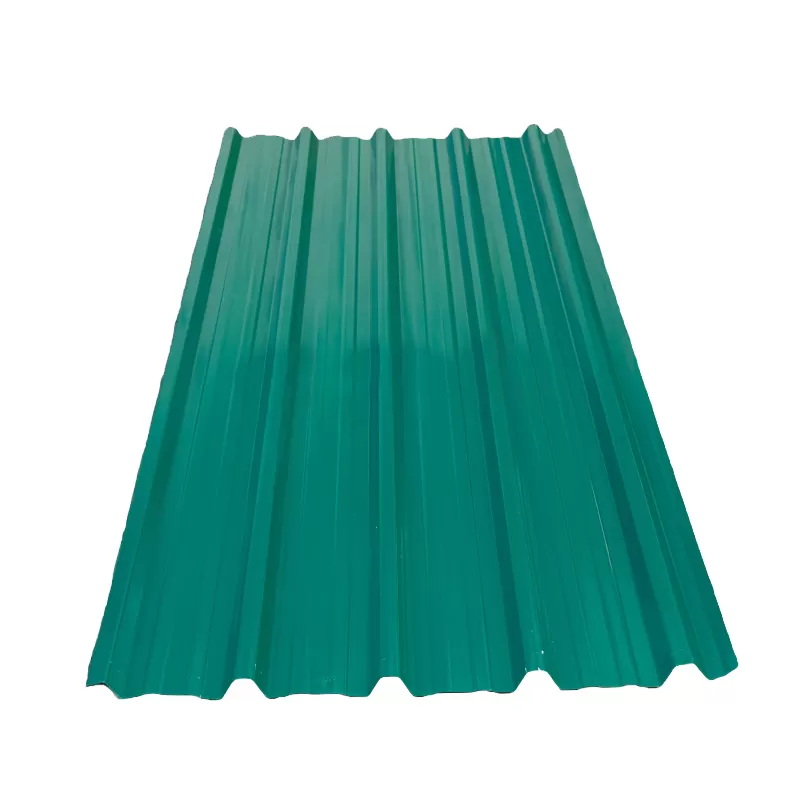
Box Profile (Glossy, Gauge 28)

KSh 650.00
Our Box Profile iron sheets are crafted for superior durability and exceptional weather resistance, making them the ideal choice for long-lasting roofing solutions across Kenya. To make your project even more convenient, we offer free delivery across Kenya when one orders 40 pieces and above. Trust us for reliable products and dependable service for all your building needs.
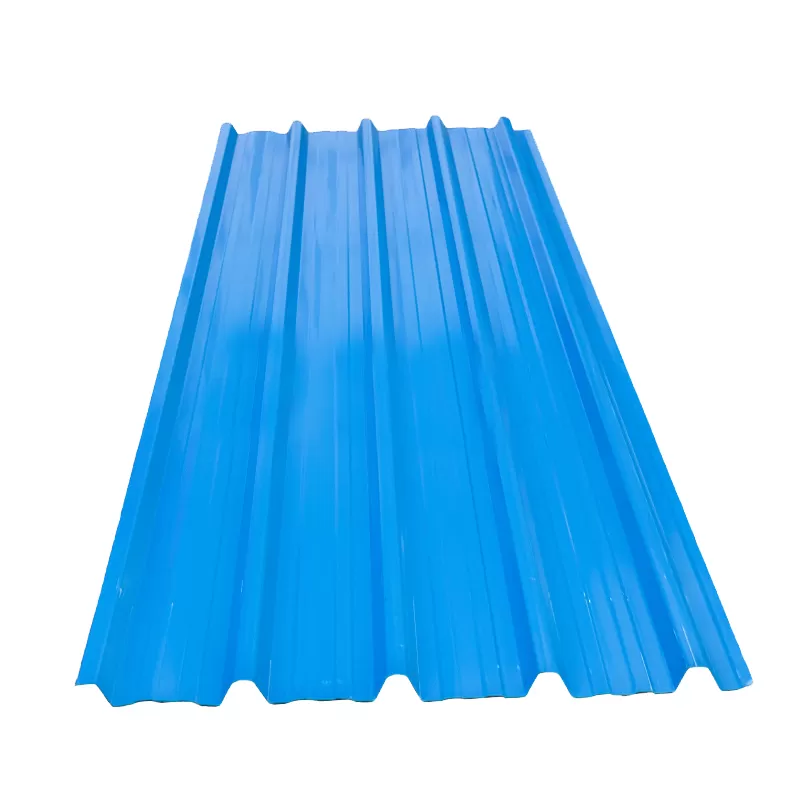
Box Profile (Glossy)

KSh 470.00
Our Box Profile iron sheets are crafted for superior durability and exceptional weather resistance, making them the ideal choice for long-lasting roofing solutions across Kenya. To make your project even more convenient, we offer free delivery across Kenya when one orders 40 pieces and above. Trust us for reliable products and dependable service for all your building needs.
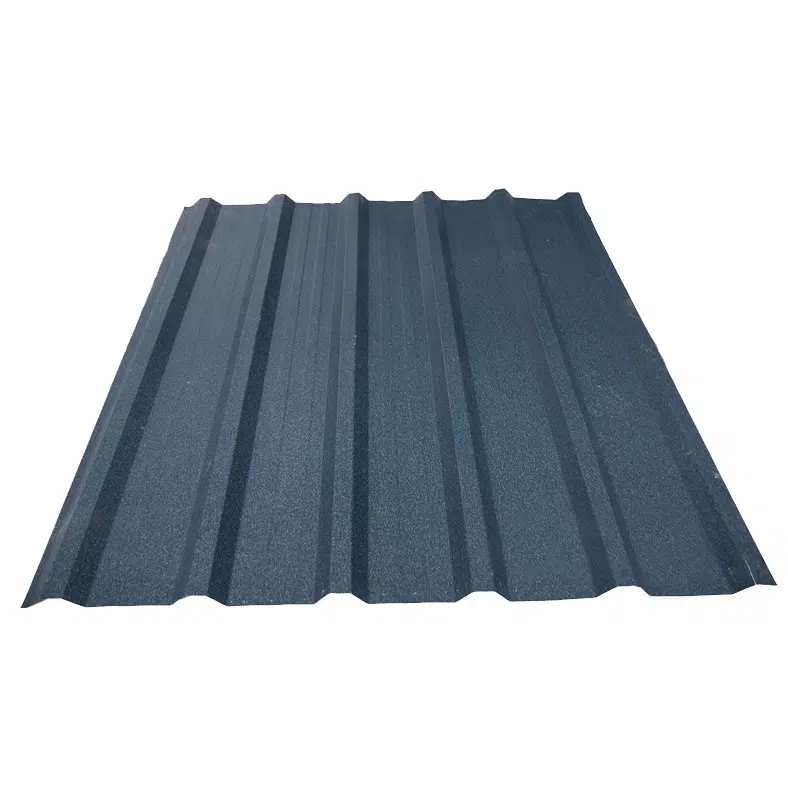
Box Profile (Matte, Gauge 28)

KSh 680.00
Our Box Profile iron sheets are crafted for superior durability and exceptional weather resistance, making them the ideal choice for long-lasting roofing solutions across Kenya. To make your project even more convenient, we offer free delivery across Kenya when one orders 40 pieces and above. Trust us for reliable products and dependable service for all your building needs.

Box Profile (Matte)

KSh 530.00
Our Box Profile iron sheets are crafted for superior durability and exceptional weather resistance, making them the ideal choice for long-lasting roofing solutions across Kenya. To make your project even more convenient, we offer free delivery across Kenya when one orders 40 pieces and above. Trust us for reliable products and dependable service for all your building needs.

Corrugated Iron Sheet (Gauge 30)

KSh 470.00
Our corrugated iron sheets are crafted for superior durability and exceptional weather resistance, making them the ideal choice for long-lasting roofing solutions across Kenya. To make your project even more convenient, we offer free delivery across Kenya when one orders 40 pieces and above. Each high-quality sheet provides excellent value for money, ensuring your structure is protected for years to come. Trust us for reliable products and dependable service for all your building needs.

Elegantile (Glossy, Gauge 28)

KSh 670.00
Our Elegant Tile  profile are crafted for superior durability and exceptional weather resistance, making them the ideal choice for long-lasting roofing solutions across Kenya. To make your project even more convenient, we offer free delivery across Kenya when one orders 40 pieces and above. Trust us for reliable products and dependable service for all your building needs.

Elegantile (Glossy, Gauge 30)

KSh 550.00
Our Elegant Tile  profile are crafted for superior durability and exceptional weather resistance, making them the ideal choice for long-lasting roofing solutions across Kenya. To make your project even more convenient, we offer free delivery across Kenya when one orders 40 pieces and above. Trust us for reliable products and dependable service for all your building needs.
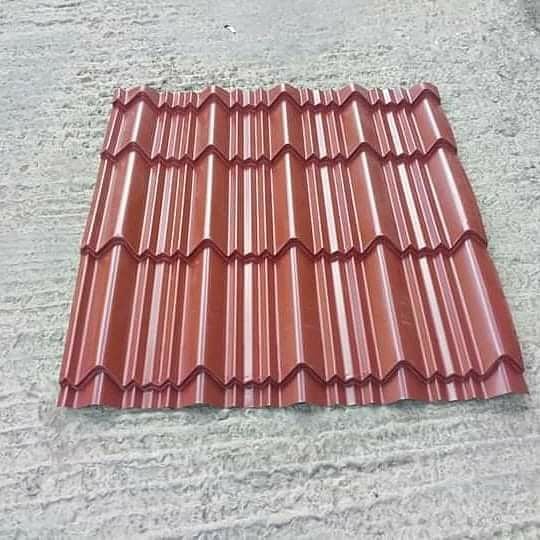
Elegantile (Matte, Gauge 28)

KSh 680.00
Our Elegant Tile  profile with matte texture are crafted for superior durability and exceptional weather resistance, making them the ideal choice for long-lasting roofing solutions across Kenya. To make your project even more convenient, we offer free delivery across Kenya when one orders 40 pieces and above. Trust us for reliable products and dependable service for all your building needs.

Elegantile (Matte, Gauge 30)

KSh 580.00
Our Elegant Tile  profile with matte texture are crafted for superior durability and exceptional weather resistance, making them the ideal choice for long-lasting roofing solutions across Kenya. To make your project even more convenient, we offer free delivery across Kenya when one orders 40 pieces and above. Trust us for reliable products and dependable service for all your building needs.

Versatile (Glossy, Gauge 28)

KSh 670.00
Our versatile iron sheets are crafted for superior durability and exceptional weather resistance, making them the ideal choice for long-lasting roofing solutions across Kenya. To make your project even more convenient, we offer free delivery across Kenya when one orders 40 pieces and above. Trust us for reliable products and dependable service for all your building needs.

Versatile (Glossy, Gauge 30)

KSh 550.00
Our versatile iron sheets are crafted for superior durability and exceptional weather resistance, making them the ideal choice for long-lasting roofing solutions across Kenya. To make your project even more convenient, we offer free delivery across Kenya when one orders 40 pieces and above. Trust us for reliable products and dependable service for all your building needs.

Versatile (Matte, Gauge 28)

KSh 680.00
Our versatile iron sheets are crafted for superior durability and exceptional weather resistance, making them the ideal choice for long-lasting roofing solutions across Kenya. To make your project even more convenient, we offer free delivery across Kenya when one orders 40 pieces and above. Trust us for reliable products and dependable service for all your building needs.
Combined Flakiness and Elongation Index Testing

Some construction projects require a combined assessment of both shape defects. This approach provides a comprehensive evaluation of aggregate quality.

What is Combined Index?

The combined flakiness and elongation index represents the total percentage of particles that are either flaky or elongated or both. Combined flakiness and Elongation Index equals FI plus EI.

This method tests the same aggregate sample sequentially. A combined value of flakiness and elongation index is determined for a sample of aggregates by conducting the Flakiness index test followed by the elongation index test on the non-flaky aggregates.

Testing Sequence for Combined Index

Here’s how the combined test works:

Step 1: Conduct the complete flakiness index test on your aggregate sample. Record the weight of flaky particles that passed through the thickness gauge.

Step 2: Take only the particles that did NOT pass through the thickness gauge (non-flaky particles). These represent the acceptable particles from the flakiness perspective.

Step 3: Test these non-flaky particles using the elongation gauge. Record the weight of particles that cannot pass through the length gauge openings (elongated particles).

Step 4: Calculate both indices and sum them to get the combined index.

This sequence prevents double-counting particles. A particle that’s both flaky and elongated only gets counted once in the flakiness test, then it’s removed from the sample before elongation testing.

When is Combined Testing Required?

Combined testing becomes necessary for:

Critical Infrastructure Projects: Bridges, dams, and major highways where failure consequences are severe require the most stringent quality control.

High-Performance Concrete Applications: Structures subjected to extreme loads, aggressive environments, or requiring extended service life benefit from this comprehensive assessment.

Quality Assurance Programs: Large projects with dedicated materials testing protocols often specify combined testing to ensure consistent quality across multiple aggregate sources.

Specification Compliance: Some international contracts, particularly those following FIDIC forms, explicitly require combined index testing. The National Construction Authority may also mandate this for certain project categories.

Acceptable Combined Index Values

The combined flakiness and elongation index so obtained shall not exceed 40% for uncrushed and crushed aggregate. However, most modern specifications are more stringent:

  • General Construction: Maximum 35-40%
  • Quality Concrete: Maximum 30-35%
  • Pavement Construction: Maximum 25-30%
  • Structural Applications: Maximum 25%

From the IS: 2386 standards, it is mandatory for the (FI + EI) percentage to be less than 35% even in worst cases.

Related Question: Is Combined Testing More Expensive?

Combined testing requires more time and labor but uses the same equipment. Expect to pay 30-40% more than single tests. However, the comprehensive data often justifies this cost for critical projects. Some laboratories offer package rates when you order both tests together.

Practical Applications in Kenya

Understanding how these tests apply to real Kenyan construction projects helps you implement quality control effectively.

Road Construction Projects

Kenya’s road network expansion under Vision 2030 requires massive quantities of aggregates. The Kenya Rural Roads Authority (KeRRA), Kenya National Highways Authority (KeNHA), and Kenya Urban Roads Authority (KURA) all maintain strict aggregate specifications.

Design Standards: The Kenya Road Design Manual provides comprehensive guidance on material requirements. Aggregate shape indices directly influence pavement design thickness and expected service life.

KeRRA Specifications: Rural road projects must balance cost constraints with performance requirements. KeRRA typically allows slightly higher flakiness and elongation indices for low-volume roads (under 50 vehicles per day) but maintains strict limits for primary rural roads connecting to national highways.

Quality Control Frequency: Major road projects test aggregate shape indices every 500-1000 cubic meters of material. This ensures consistency throughout construction and helps identify when quarry crushing operations need adjustment.

Building Construction Applications

Residential and commercial building projects use enormous quantities of concrete. Aggregate quality directly impacts structural integrity and long-term durability.

Ready-Mix Concrete Suppliers in Nairobi, Mombasa, Kisumu, and other major cities maintain quality control programs that include regular shape testing. Reputable suppliers test every aggregate source before approval and conduct periodic verification testing.

High-Rise Buildings: Projects like those in Nairobi’s Upper Hill and Westlands districts require aggregates meeting the strictest specifications. The tests required for high-rise building construction include comprehensive aggregate characterization, with flakiness and elongation indices among the key parameters.

Cost Considerations: Using quality aggregates with low shape indices costs more initially but provides better value over the structure’s lifetime. The additional cement required to compensate for poor aggregate shape often exceeds the savings from using cheaper materials. Check current concrete grade contractor rates to understand regional pricing variations.

Foundation Design Implications

Aggregate shape affects foundation concrete performance significantly. The foundation types suitable for different Kenyan soils require specific concrete properties that depend partly on aggregate quality.

Black Cotton Soil Areas: Expansive soils in Nairobi, parts of Nakuru, and other regions require robust foundations. Using aggregates with excessive flakiness or elongation increases the risk of concrete cracks as the foundation moves with soil volume changes.

Coastal Regions: Mombasa and coastal areas face aggressive chloride environments. Poor aggregate interlocking creates pathways for chloride penetration, accelerating reinforcement corrosion. Shape testing becomes critical for durability.

Related Question: Do Small Construction Projects Need Aggregate Testing?

For residential projects under three stories, full laboratory testing may not be economical. However, you should still verify your aggregate source’s reputation and request test certificates. Many quarries maintain test records that they can share with customers.

For commercial buildings, institutional facilities, and any structure requiring National Construction Authority approval, proper testing is mandatory. The cost of testing (typically KES 5,000-15,000 per complete aggregate characterization) represents less than 0.1% of most project budgets.

Flakiness Gauge

Common Errors and Best Practices

Avoiding mistakes during shape testing ensures accurate results that truly represent aggregate quality.

Sampling Errors

Random Selection: Take care while taking sample. Do not collect selected pieces. Collect pieces by only random sampling. The temptation to pick “representative” pieces introduces bias. Use quartering or random grab sampling instead.

Sample Size: Take a minimum of 200 pieces of each fraction to be tested. Smaller samples don’t provide statistical validity. For critical projects, consider testing 300-400 pieces per fraction.

Sample Condition: Test aggregates in their typical moisture condition or dry them to constant weight at 105-110°C. Wet aggregates may stick together, affecting particle separation during gauging.

Equipment Calibration Issues

Gauge Accuracy: Thickness and length gauges must meet IS 2386 dimensional tolerances. Verify gauge dimensions annually using calibrated measuring instruments. Worn gauges with enlarged openings produce artificially low index values.

Balance Calibration: The weighing balance must be accurate to 0.1% of sample weight. Calibrate monthly using certified weights. An uncalibrated balance can introduce 2-5% error in index calculations.

Sieve Condition: Worn sieves with enlarged openings affect particle separation. Replace sieves when opening sizes exceed tolerance (typically ±5% of nominal size). Clean sieves after each use to prevent particle buildup.

Testing Technique Mistakes

Improper Gauging: When using the thickness gauge, ensure particles pass through on their thinnest dimension. For elongation gauges, try passing particles lengthwise. Forcing particles at angles produces incorrect results.

Inadequate Drying: Aggregates must be oven-dried to constant weight before testing. Surface moisture adds weight, artificially lowering calculated indices. Dry samples for at least 24 hours at 105-110°C.

Calculation Errors: Double-check your arithmetic. A simple calculation mistake can approve unsuitable aggregates or reject acceptable materials. Many laboratories use spreadsheet templates to minimize calculation errors.

Quality Assurance Procedures

Documentation: Maintain detailed records including:

  • Aggregate source and sampling location
  • Sample collection date and testing date
  • Equipment identification numbers
  • Raw data for each size fraction
  • Calculation worksheets
  • Technician signatures

Inter-Laboratory Comparison: Periodically test split samples at different laboratories. Results should agree within ±3% for flakiness index and ±3% for elongation index. Larger discrepancies indicate technique or equipment problems.

Retesting Protocols: When results fall near specification limits (within 5%), retest using a fresh sample. This confirms whether the aggregate truly meets or fails requirements.

Related Question: How Can Quarries Improve Aggregate Shape?

Crushing technology significantly affects aggregate shape. The particle shape depends not only on the nature of the parent material but also on the type of crusher and its reduction ratio.

Vertical Shaft Impact (VSI) Crushers: These produce the most cubical particles. VSI crushers use high-speed impact to fracture aggregates along natural weakness planes, creating angular, roughly equidimensional particles.

Cone Crushers: Secondary crushing with cone crushers helps reduce elongated particles. Proper feed gradation and choke feeding improve product shape.

Multiple Crushing Stages: Three-stage crushing (jaw → cone → VSI) produces the best shape characteristics. Each stage further refines particle geometry.

Frequently Asked Questions

What is the difference between flakiness index and elongation index?

Flakiness index measures particles whose thickness (smallest dimension) is less than 0.6 times their mean dimension. These are flat, plate-like particles. Elongation index measures particles whose length (largest dimension) exceeds 1.8 times their mean dimension. These are needle-like particles. Think of flakiness as measuring how thin something is, while elongation measures how long it is relative to its width.

What are the maximum limits for flakiness and elongation index?

Most specifications limit flakiness index to 30-35% and elongation index to 35-45% for general construction. Road construction typically requires stricter limits: maximum 25-30% for flakiness and 30-35% for elongation. High-performance concrete and critical structures often specify maximum 15-25% for both indices. The combined index (FI + EI) should not exceed 35-40% for most applications.

Why are flaky and elongated aggregates avoided in construction?

These irregularly shaped particles cause multiple problems: they require more water and cement, reducing workability and increasing costs; they create weak planes in concrete that reduce strength; they break easily during pavement compaction; they impede proper consolidation around reinforcement; and they reduce long-term durability by creating pathways for water infiltration. The structural and economic consequences far outweigh any cost savings from using cheaper, poorly shaped aggregates.

Which test should be conducted first - flakiness or elongation?

When determining a combined index, always conduct the flakiness test first, then perform the elongation test on the non-flaky particles (those that didn't pass through the thickness gauge). This sequence prevents counting the same particle twice. For independent testing where you only need one index value, the order doesn't matter—you can conduct either test on the full sample.

Can aggregates smaller than 6.3mm be tested?

No. Both flakiness and elongation index tests are not applicable to sizes smaller than 6.3mm. The gauge dimensions become too small for accurate measurement, and fine aggregates (sand) typically don't exhibit the same problematic flaky or elongated characteristics as coarse aggregates. Shape testing focuses on coarse aggregates ranging from 6.3mm to 63mm.

Where can I get aggregates tested in Kenya?

Several certified laboratories offer aggregate testing in Kenya:

  • Kenya Bureau of Standards (KEBS) - Popo Road, Nairobi
  • SGS Kenya - Multiple locations
  • GeoIssa Material Testing Laboratory - Nairobi
  • Materials Testing Department - Ministry of Roads & Public Works

Most certified materials testing laboratories are accredited to ISO/IEC 17025:2017 standards. Test results are typically released within 14 working days, with expedited service available for urgent projects at additional cost.

Lorem ipsum dolor sit amet, consectetur adipiscing elit. Ut elit tellus, luctus nec ullamcorper mattis, pulvinar dapibus leo.

author-avatar

About Eng. Evans Owiti

Eng. Evans Owiti is a seasoned Civil Engineer with over five years of experience in Kenya's construction industry. He is passionate about knowledge sharing and regularly contributes insights about engineering practices and industry developments through his writing.

Leave a Reply

Your email address will not be published. Required fields are marked *